【Source Commentary】Why is Qinghai's "Cold" Business Booming?
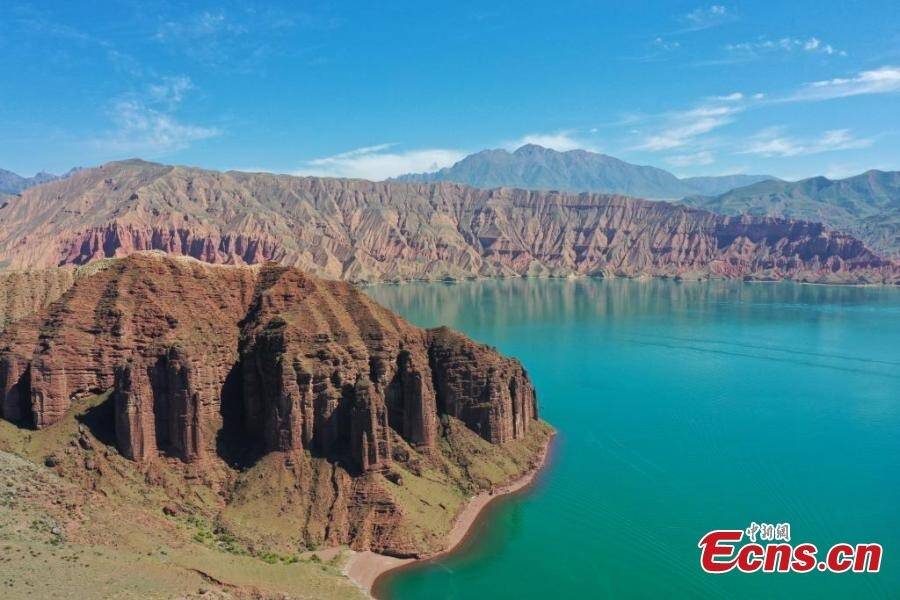
As October arrives, the Qinghai Plateau is quietly wrapped in chill. However, the intelligent greenhouses in Datong County are warm and cozy, with clusters of cherry tomatoes hanging heavy on the vines; in Huangyuan County, farmers are busy harvesting in the fields, and fresh vegetables are being packed for shipment; by the Longyangxia Reservoir, cold-chain trucks are transporting cold-water fish to the airport. Once a "cold resource" that discouraged development, it has now become Qinghai's hottest "code to prosperity".
This transformation from "cold" to "gold" holds the in-depth logic behind the plateau's development.
Technology Builds a "Warm Stage" for the "Cold Plateau"
Qinghai has an average annual temperature of only 3.4℃. High altitude and a short frost-free period were once a "tight spell" for agriculture. But the involvement of technology has turned this climatic disadvantage into a quality advantage.
In the 72,000-square-meter intelligent greenhouse in Datong County, there is no traditional soil; neatly arranged planting troughs are in place, and temperature control equipment precisely adjusts light, temperature, water, and fertilizer.
The cherry tomato varieties introduced from France, grown in the plateau environment with a day-night temperature difference of over 15℃, accumulate far more sugar than those in ordinary producing areas, with a sweetness of over 9 degrees. They sell for up to 24 yuan per kilogram, and 95% of the produce is sold to markets in Lanzhou, Xi'an, and even Hong Kong.
In the fields of Huangyuan County, technology has turned "small crops" into a "big industry".
The snow peas in Shenzhong Township have adopted an integrated water and fertilizer system, bidding farewell to the era of "relying on the weather for harvest". The per-mu yield reaches 1,000 kilograms, and the output value is several times that of wheat cultivation. The pea shoots in Sizhai Township are harvested and graded according to the "two leaves and one core" standard. The high-quality "butterfly core" pea shoots can be sold at 20 yuan per kilogram, becoming a popular product in the Hong Kong market.
Technology not only transforms the growing environment but also strengthens quality foundations. A total of 312 vegetable bases across the province have realized standardized production, with a vegetable testing qualification rate of over 98%; the cold-water fish farming industry has established a full-chain monitoring system, enabling traceability from breeding to processing. Once known only as "plateau specialties", these products now break into the market with solid strength.
Market Channels Connect "Cold Products" to "Hot Dining Tables"
At Xining Airport in October, flights carrying cold-water fish are ready to take off.
The salmon processed in Longyangxia in the morning can appear on the dining tables of Hong Kong citizens the same night through the "belly cargo transportation" mode. This "same-day arrival" speed has helped Qinghai's cold-water fish firmly take the top spot in the export of similar products in China.
In 2024, Qinghai's cold-water fish export value exceeded 300 million yuan, a year-on-year increase of nearly 1,200%; in the first 8 months of 2025, the expected export value will reach 340 million yuan, surpassing last year’s total and accounting for 97% of the national total export value of salmon. From Russia to Spain, from Southeast Asia to Hong Kong, China, the "cold-water delicacies" from Qinghai have made their way to the dining tables of 15 countries and regions.
The "overseas journey" of cool-climate vegetables has been equally smooth. In 2023, they achieved a "breakthrough of zero" in exports; in 2024, the export volume entered the "1,000-ton level"; in the first 8 months of 2025, the export volume reached 2,267 tons, a year-on-year increase of 1.4 times. Twenty kinds of vegetables, including Ledu purple garlic and Huzhu red bolt, have gone abroad through 68,000 mu of export-registered bases, being sold to countries such as Kyrgyzstan and Malaysia.
The domestic market is also booming. The green garlic sprouts from Riyue Township in Huangyuan County are sold in bulk from July to October every year, precisely filling the "summer shortage" in eastern China. A total of 31,200 tons are sold to more than 20 provinces and cities across the country. The "market + company + base + farmer" model has united 183,000 farmers to explore the market, and new business entities contribute 85% of the total vegetable output.
Policies Inject "Warm Momentum" into the "Cold Industry"
The transformation of Qinghai from "cold" to "hot" has never been a spontaneous process, but a resonance between top-level design and grass-roots practice.
The provincial Party committee and government have focused on the goal of the "dual cold industries" and successively issued policies such as the "Modern Facility Agriculture Construction Plan" and the "Implementation Opinions on Accelerating the Development of Modern Fishery", defining development paths including the Yellow River cold-water fish industry cluster and the national-level cool-climate vegetable industrial park. Leading officials have led teams to Hong Kong to sign contracts, smoothing out key links such as cold-chain logistics and international certification, and paving the way for product exports.
Departmental collaboration has formed a joint force.
Xining Customs has innovated the "local inspection green channel", reducing the export customs clearance time by half and helping enterprises obtain 11 "access certificates" for high-end markets. The agricultural department has promoted the "cadres in charge of areas + technicians in charge of households" model, bringing planting technologies to the fields. The commerce department has established 26 special supply bases and experience stores outside the province, making the "Qing" brand increasingly well-known.
Infrastructure development keeps pace with industrial growth.
154 agricultural product cold storage and fresh-keeping facilities and 41 constant-temperature fresh-keeping warehouses have been completed and put into use. The 100,000-ton cold storage capacity has significantly reduced the vegetable loss rate. A complete industrial chain is taking shape on the plateau, covering the entire process from the field to the port and from sorting to transportation.
Ecology is the "Solid Foundation" of "Cold Resources"
When you walk into the fields of Qinghai, you often hear people say: "Good products are nurtured by the ecology."
This land, with an average altitude of 4,058 meters, boasts clean air and high-quality water sources. It is this ecological gift that results in fewer diseases and pests for cool-climate vegetables, with pesticide usage far lower than that in plain areas; it also allows cold-water fish to grow in pure water, obtaining the international dual certification of ASC and BAP.
Qinghai's experience has validated the principle that "lucid waters and lush mountains are invaluable assets". The better the ecological conservation, the stronger the industrial momentum. On the premise of prioritizing ecological protection, Qinghai has not only guarded its "pure land" but also reaped "golden beans" — in 2025, farmers in Huangyuan County saw a 2.4% year-on-year increase in income from cool-climate vegetables, and the cherry tomato base in Datong County has driven stable income growth for surrounding farmers.
From fearing the "cold" to turning "cold" into gold, Qinghai's story contains the wisdom of development — the so-called "disadvantage" is nothing but an advantage that has not been activated. When technology overcomes natural limitations, when policies smooth market channels, and when ecology solidifies the foundation of quality, "cold resources" gain vigorous vitality.
At this moment, the cold wind is blowing in Qinghai, but the enthusiasm of the industry shows no sign of abating. The tomatoes, broad beans, and cold-water fish that travel from the plateau to the world not only carry the smiles of farmers but also write a development report tailored to local conditions — in this report, there is the background color of ecology, the bright color of technology, and the warm color of hard work.
相关推荐
-
"3H Plateau Certification System" Officially Launched; Government, Enterprises, Universities, and Research Institutes Jointly Build the "Qinghai Model" for Industrial Quality Development
10-18 0评

-
Court ruling on tariffs a blow to US administration
10-11 0评

-
Scenery of Kanbula National Geopark listed as Global Geoparks by UNESCO
06-24 0评


评论